07/02/26
The importance of healthy ecosystems for supply chains
By Ariana Carter, ECOM Cocoa Sustainability Lead
Healthy ecosystems are essential to the productivity and long-term viability of agricultural supply chains. Nature supports the processes that keep cocoa landscapes functioning: pollination, soil formation, nutrient cycling, natural pest control, water storage and purification, and micro-climate regulation. Together, these processes help ecosystems absorb and recover from external shocks such as droughts, floods, fires, pests, and disease.

Research consistently shows that intact, biodiverse ecosystems are more resilient to environmental shocks than degraded ones. This dynamic was clearly illustrated in the cocoa sector just a few years ago. In Côte d’Ivoire, natural forest cover is now estimated at only around 10% of total land area, down from roughly 50% in the 1960s. The ecosystem is therefore highly degraded, and when adverse weather conditions hit in 2023–24, productivity dropped by more than 30% across Côte d’Ivoire and Ghana. While several factors contributed to this decline, the fragmented and ecologically depleted cocoa landscape reduced the system’s ability to absorb climatic stress.
For companies like ECOM, the resilience that comes with sustainable ecosystems helps to stabilise yields and support reliable supply over time, reducing operational risk. This resiliency mirrors what we seek to build in our supply chains: systems designed to adapt, withstand pressure over time, and continue to perform in a continually more unpredictable environment.
How do we look beyond carbon?
Today, much of the investment in nature is driven by carbon markets. This has, crucially, helped mobilise funding for ecosystem restoration, but it also risks narrowing the focus to measurable and accountable carbon outcomes only.
While ecosystem services are less standardised and arguably harder to measure and monetise than carbon, they are critical to reducing supply risk. Long-term agricultural productivity depends just as much on soil health, water availability, and biodiversity. Projects like forest protection in lands adjacent to agriculture that strengthen ecosystems more broadly could deliver more durable outcomes. They support healthier landscapes, improve farm productivity, and could result in higher-quality and longer-lasting carbon benefits as well, all while reducing risk to agribusinesses’ long-term supply.
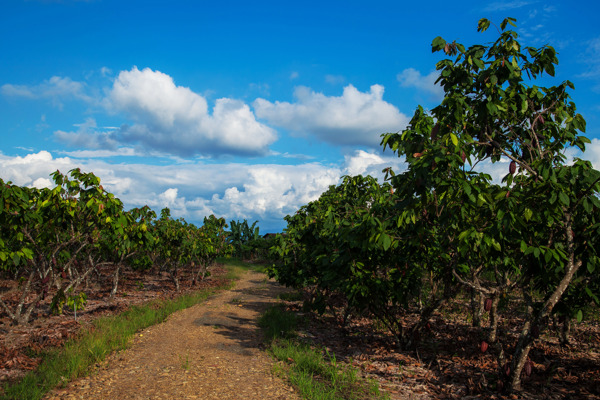
In order to achieve this, organisations can map out their reliance on various ecosystem services to understand where there could be potential risks and therefore costs for the company, helping to channel funding into projects in the same way that is often done for carbon initiatives.
What does this mean for cocoa?
For cocoa farmers, carbon targets are often abstract. What matters day to day is water, shade, soil quality, and managing pests and disease, as these factors tangibly and directly affect their yields and livelihoods. As a result, carbon projects that also deliver these nature-based outcomes are more likely to resonate locally and succeed. When farmers see real, practical improvements on their farms, they are more willing and able to stay engaged over the long-term.
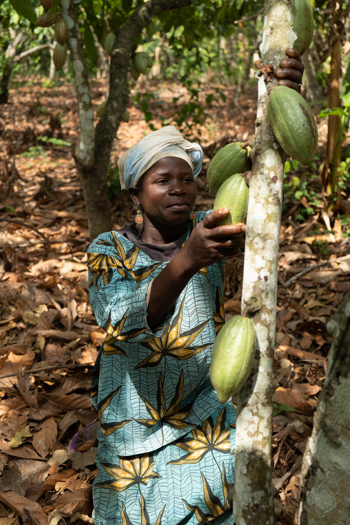
Accordingly, from my perspective at ECOM, farmers should be the primary beneficiaries. Climate and carbon benefits should follow as a result, not the other way around. Encouragingly, the voluntary carbon market is increasingly recognising this, with greater value placed on projects that also deliver biodiversity and wider ecosystem benefits. However, quantifying carbon benefits off-farm continues to be unclear in existing carbon guidance, which is a crucial part of the equation.
Building long-term resilience
Ultimately, resilient supply chains depend on resilient ecosystems. I see investment in healthy ecosystems as essential not only for nature and farming communities, but for the long-term security, quality, and sustainability of agricultural supply.
More news
News
Click to read this articleECOM Italia: 10 years of growth and a new chapter for Esperanto Coffee
ECOM Italia recently celebrated 10 years since opening its first office in Genoa in 2016! As part of this continued development, Esperanto, the specialty coffee brand created by ECOM Italia in 2022, is now Esperanto Coffee: a new company based in Trieste, created to support this growth and offer coffee professionals an even more complete range of products and services.
News
Click to read this articleCóndor hosts Maestros Productores specialty coffee competition
Last month, Maestros Productores 2026 microlot competition brought together some of Colombia’s finest specialty coffee offerings.
News
Click to read this articleCAMSA celebrates 26 years!
CAMSA, our subsidiary in Peru, recently celebrated 26 years since opening its first office in 2000– a history shaped by its ability to adapt, grow and evolve alongside the country’s coffee and cocoa supply chains.
News
Click to read this article2025 Group Sustainability Report (GSR)
We are pleased to share the release of our 2025 Group Sustainability Report, highlighting the progress made across our coffee, cocoa, cotton, and nuts and ingredients supply chains over the past year.
News
Click to read this articleSupporting coffee farming families in Santander alongside Colcafé and Nutresa
After four years of collaboration, ECOM and its partners have concluded our "Café, Biodiversidad y Desarrollo de Empresas Familiares" programme, an initiative focused on strengthening family coffee businesses through partnership, commitment and a shared long-term vision.
News
Click to read this article'ECO': ECOM Mexico’s new virtual people partner
With only around 450 of ECOM Mexico's 1,300 employees holding a corporate email account, Human Resources created ECO– an AI-powered Virtual People Partner available on WhatsApp– to strengthen the connection with employees, enhance their experience, and open new channels to hear their voices.
News
Click to read this articleECOM SMS Verified achieves recognition as a sustainable coffee scheme
The Global Coffee Platform (GCP) recently recognised ECOM’s SMS Verified for the third time as equivalent to their Sustainable Reference Code, with this recognition valid through July 2028. This recognition follows an extensive documentation review process covering sustainability-related requirements and alignment with the GCP’s guidelines.
News
Click to read this articleAcquistion of Universal Commodities (Tea) Trading, Inc. to the ECOM Group
We are pleased to announce that Universal Commodities (Tea) Trading (UCTT), will be joining the ECOM Group, marking an important step in expanding its global soft commodities platform and establishing its presence in the tea sector.
News
Click to read this articleSilent Brew, Strong Voices Project Updates
Following the SCTA Next Gen's Sustainability Award for our project 'Silent Brew, Strong Voices', we're proud to share an update on the impact this project is having in Pu'er, China.